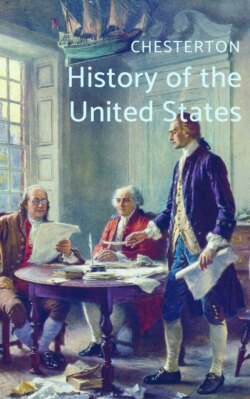
"What I then saw and heard of contemporary America so fascinated me that—believing as I do that the key to every people is in its past—I could not rest until I had mastered all that I could of the history of my delightful hosts. This I sought as much as possible from the original sources, reading voraciously, and at the time merely for my pleasure, such records as I could get of old debates and of the speech and correspondence of the dead." "History of the United States" by Cecil Chesterton is an easy-to-read synopsis of US history from the perspective of a British scholar. This is History at it's best.
Оглавление
Chesterton Cecil. History of the United States (US History)
Table of Contents
INTRODUCTION
AUTHOR'S PREFACE
CHAPTER I: THE ENGLISH COLONIES
CHAPTER II: ARMS AND THE RIGHTS OF MAN
CHAPTER III: "WE, THE PEOPLE"
CHAPTER IV: THE MANTLE OF WASHINGTON
CHAPTER V: THE VIRGINIAN DYNASTY
CHAPTER VI: THE JACKSONIAN REVOLUTION
CHAPTER VII: THE SPOILS OF MEXICO
CHAPTER VIII: THE SLAVERY QUESTION
CHAPTER IX: SECESSION AND CIVIL WAR
CHAPTER X: "THE BLACK TERROR"
CHAPTER XI: THE NEW PROBLEMS
Imprint
Отрывок из книги
Title Page
INTRODUCTION
.....
We, therefore, the representatives of the United States of America in General Congress assembled, appealing to the Supreme Judge of the World for the rectitude of our intentions, do in the name and by the authority of the good people of these colonies, solemnly publish and declare that these United Colonies are and of right ought to be Free and Independent States.
The first principles set out in the Declaration must be rightly grasped if American history is understood, for indeed the story of America is merely the story of the working out of those principles. Briefly the theses are two: first, that men are of right equal, and secondly, that the moral basis of the relations between governors and governed is contractual. Both doctrines have in this age had to stand the fire of criticisms almost too puerile to be noticed. It is gravely pointed out that men are of different heights and weights, that they vary in muscular power and mental cultivation—as if either Rousseau or Jefferson was likely to have failed to notice this occult fact! Similarly the doctrine of the contractual basis of society is met by a demand for the production of a signed, sealed, and delivered contract, or at least for evidence that such a contract was ever made. But Rousseau says—with a good sense and modesty which dealers in "prehistoric" history would do well to copy—that he does not know how government in fact arose. Nor does anyone else. What he maintains is that the moral sanction of government is contractual, or, as Jefferson puts it, that government "derives its just powers from the consent of the governed."