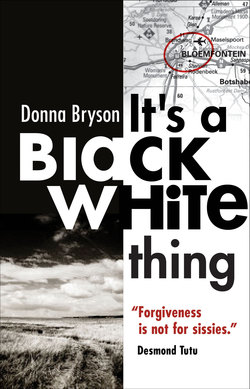
In 2008, the University of the Free State was thrust into the international spotlight when the racist Reitz video became public. Have South Africans changed in any significant way since 1994, or are black and white still constrained by racial stereotypes? This is the question American-born Donna Bryson asks herself as she goes to investigate. Over the next five years, Bryson returns again and again to Bloemfontein and realises that the university is a microcosm of the rest of the country. On the UFS campus, black and white have had to learn to live together, but this has not always been easy. Bryson uncovers numerous personal stories of transformation, of students and staff from different backgrounds beginning to see their common humanity under the leadership of their charismatic rector, Jonathan Jansen. A story of hope in a country desperate for good news.
Оглавление
Donna Bryson. It's a Black-White Thing
Prologue
1. Songs of change
2. Nation building
3. Fragile bridges
4. A knowledge of apartheid
5. Views from abroad
6. Unexpected encounters
7. Family matters
8. The weight of history
9. Dancing in Bloemfontein
10. The languages we speak
11. Choosing to lead
12. The human project
Epilogue
Endnotes
List of interviews
Acknowledgements
Synopsis
About the author
Отрывок из книги
DONNA BRYSON
It’s a
.....
Among the senior officials who rushed to the campus to help Ramahlele was Benito Khotseng. In 1993 Khotseng had become one of the university’s first black senior managers. Years later he would offer me further insight into this piece of history and was, like Ramahlele, willing to relive the turmoil of the past. The two also display a remarkable resilience that I see as the real story, a theme that comes up again and again in the stories of South Africans.
Early on, Khotseng’s job had entailed recruiting students. He also took on the role of finding scholarships for black students, and creating special classes to ensure that students who had had the inferior education afforded them during apartheid could keep up academically at a formerly white university. And although not a formal part of his job description, Khotseng’s duties, out of necessity, came to include trying to keep racial confrontations from flaring into violence.